Menopause Changed More Than My Body
It changed how I wanted to live, work, travel, and spend the next chapter of my life.
Why I Started Menopause Nomad
If you've ever stood in front of a hotel mirror at 3 a.m. wondering why no one warned you about this part of menopause — this is for you.


I’m 51. After nearly three decades in corporate leadership, I found myself asking a bigger question:
Where do I actually want to spend the next chapter of my life?
Right now, that answer may be Cyprus. Or Crete. I haven’t decided yet.
What I do know is this: menopause changed far more than my body. It changed how I want to live, work, travel, and move through the world.
I’m building toward a slower, more intentional life abroad while navigating hot flashes that ignore itineraries, sleep that now requires strategy, and a body that suddenly negotiates every carry-on item.
I’ve always traveled carry-on only.
Menopause renegotiated the contents.
The checklist I created isn’t influencer packing fantasy or affiliate-stuffed perfection. It’s the real list — what actually helps, what didn’t work, and what I stopped bringing entirely.
If you’re somewhere between “I wonder if I could do this” and “I’m actually doing this,” I made this for you.
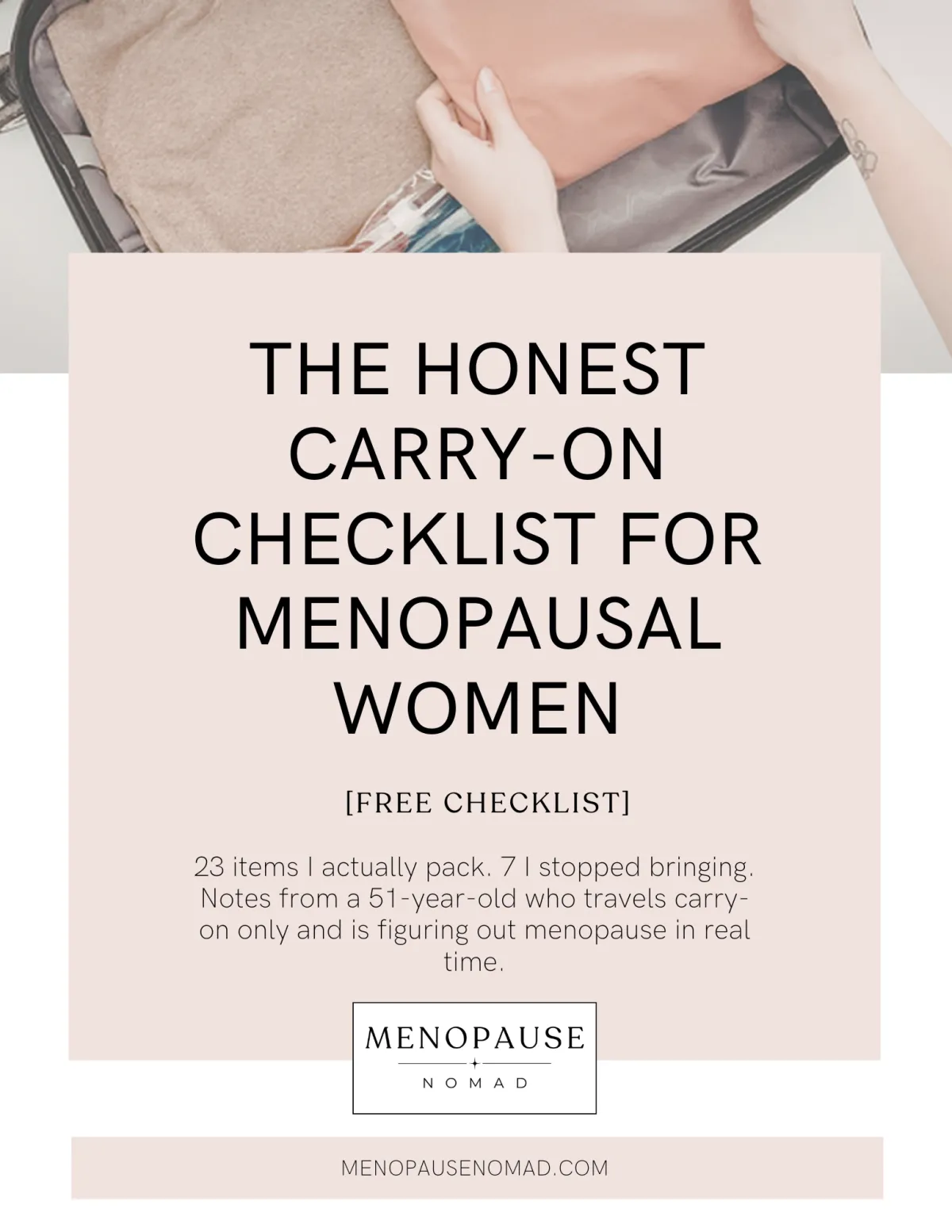
The Honest Carry-On Checklist for Menopausal Women
23 items I actually pack. 7 I stopped bringing. Written by a 51-year-old who travels carry-on only and is figuring out menopause in real time.
What's In The Checklist?
The 23 items I won't fly without (with brand-agnostic notes)
The 7 things I packed for years and finally stopped bringing
What goes in the personal item vs. the carry-on (the menopause edit)
The cooling/sleep kit that lives at the top of the bag for a reason
A printable one-page version for the women who like a paper checklist (it's most of you)
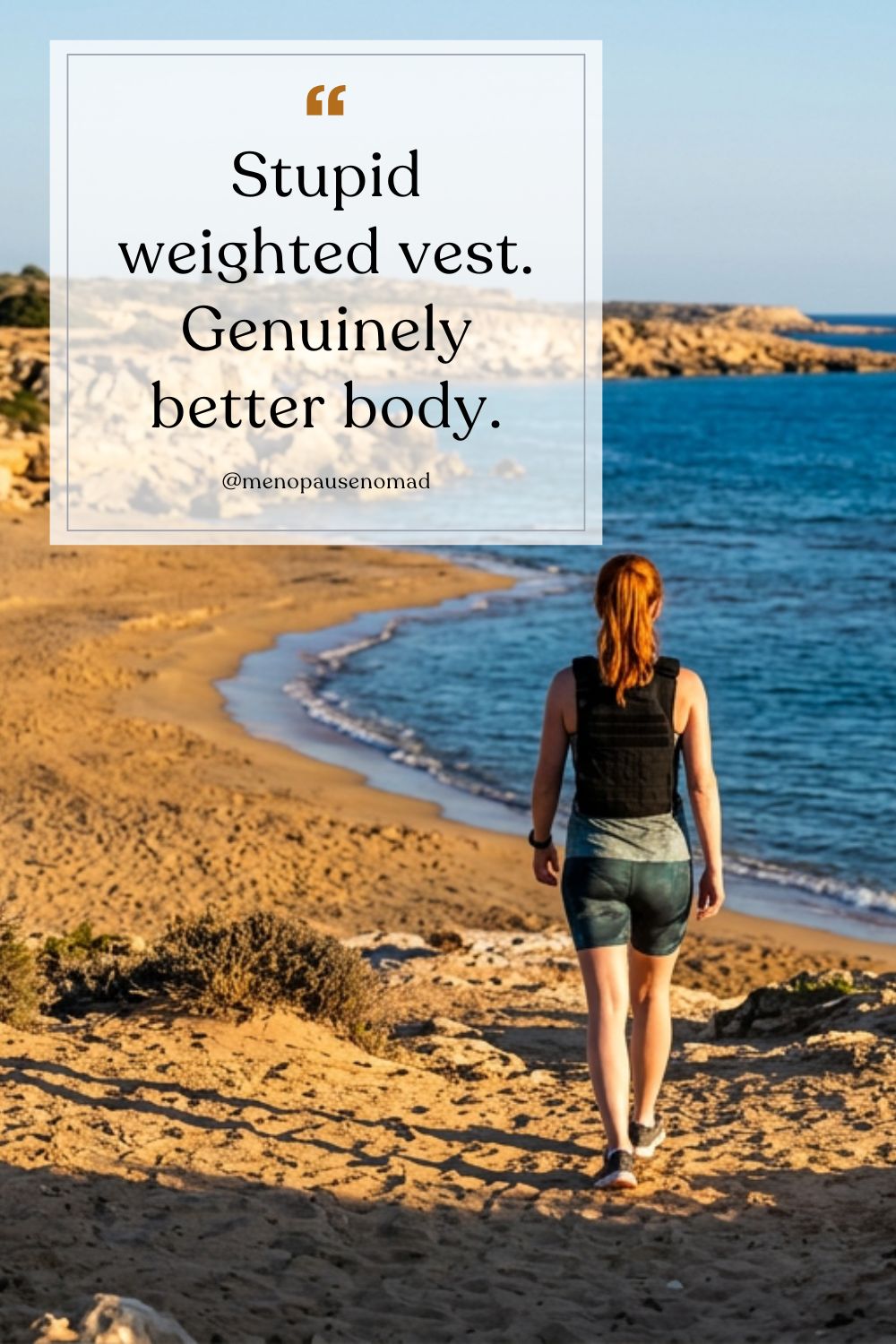
I Hated My Weighted Vest for 90 Days. Then This Happened.
I bought a weighted vest at 50 because the bone density research scared me into it.
That's the honest answer. Not because I wanted to be one of those women walking around the neighborhood looking like a low-budget tactical operator. Not because I was inspired by a wellness influencer. Not because I had any enthusiasm for it whatsoever. I bought it because I had spent enough time reading about menopause and bone loss that I could not, in good conscience, keep walking unweighted past the age of 50.
Here is what nobody warns you about: the first three months are awful.
The vest is heavy in a way that doesn't sound heavy when you read the specs. Twelve pounds. Fifteen pounds. "That's nothing," you think. Then you put it on and walk for thirty minutes and discover that your traps have opinions, your lower back has questions, and your formerly comfortable walking route has become an extended exercise in mild resentment.
I wore it anyway. Three to five times a week. For ninety days. Cursing it under my breath approximately every six steps for the entire first month.
This is what changed at ninety days. This is what didn't. This is what the research actually says about why women over 50 should be doing this, even when we don't want to. And this is the honest verdict from someone who started as a reluctant participant and ended up as a reluctant convert.
A small caveat before we begin: I'm not a doctor, a kinesiologist, or a bone health specialist. This is my personal experience plus the published research I've found credible. If you have existing bone issues, joint problems, or balance concerns, talk to your doctor before adding weighted exercise to your routine.
Why I Bought a Weighted Vest in the First Place
Let me set up the why, because it matters.
Estrogen does a lot of quiet work in a woman's body that nobody appreciates until it leaves. One of its many jobs is maintaining bone density. Estrogen helps regulate the cycle of bone breakdown and bone rebuilding that happens constantly throughout life. When estrogen drops in perimenopause and crashes in menopause, that cycle gets unbalanced — bone breakdown continues, but bone rebuilding slows down.
The result, over time, is bone loss. Women lose up to 20% of their bone density in the first five to seven years after menopause. Twenty percent. The math on that is brutal, and it's the reason post-menopausal women are dramatically more likely to develop osteoporosis, suffer hip fractures, and have falls that result in life-changing injury.
For me, this isn't an abstract risk. My grandmother had osteoporosis. I watched what it looked like in the last years of her life — the careful movements, the fear of falling, the way her body became something she had to negotiate with rather than rely on. My mother is at risk. I am at risk. The genetic line is doing me no favors.
Which is why I read the research and stopped being able to ignore it. There is a window of opportunity in the first decade after menopause where the right interventions can meaningfully slow bone loss. Weight-bearing exercise is one of the most accessible. The window doesn't stay open forever.
The research consensus on what helps mitigate this is annoyingly clear:
Weight-bearing exercise. Specifically, exercise that puts mechanical stress on the bones, which signals the body to maintain (or rebuild) bone density in those areas. Walking is a mild form of this. Walking with added weight is a stronger form.
Resistance training. Lifting weights, doing bodyweight exercises, anything that asks muscles to work against resistance.
Adequate protein. (This is where the "stupid protein" conversation that's eating my life enters the chat.)
Adequate calcium and vitamin D.
I was already walking daily. I was already lifting (inconsistently). I was already trying to hit my protein targets. The one missing piece of the puzzle was that my daily walks weren't doing meaningful weight-bearing work for my upper body or spine — and those are exactly the areas where post-menopausal bone loss is most dangerous.
A weighted vest was the practical solution. Add weight, walk anyway, hit the bone density button without changing my routine. The science was clear. My enthusiasm was zero.
The First Month: I Was Ambitious and It Showed
I started at 20 pounds.
In hindsight, this was ambitious. The general guidance for starting weighted vest training is somewhere around 5-10% of body weight, which for most women in midlife works out to somewhere in the 8-15 pound range. Twenty pounds is at the higher end of what's reasonable for a starter weight, and I went there because I felt strong, the vest I bought had a fixed weight (not adjustable), and I had decided I was going to do this properly or not at all.
Here is what twenty pounds feels like on day one when you have not been carrying additional load on your body in years: it feels like exactly what it is, which is twenty pounds.
Within ten minutes of my first walk, my shoulders were sore. Within twenty, my lower back was talking to me in a tone I recognized from injuries past. By thirty minutes I was back at my front door wondering whether I had just made a decision I was going to regret for several weeks. My calculation at that point was binary: either this gets easier or I quit. The vest is not adjustable. I cannot dial down the weight. I either adapt or I shelf this thing.
I decided to adapt.
The first two weeks were the hardest. I shortened my walks — instead of my usual 45-50 minute route, I went out for 20-25 minutes at a time, twice a day on some days. Same total volume, smaller doses, more recovery between sessions. I drank more water than usual because my body was working harder. I added a small magnesium routine in the evening because my muscles were tight in places they hadn't been tight in years.
I also gave myself a quiet rule: I had to wear the vest at least three times a week for the first month, no matter how I felt about it. Not because I was trying to be hardcore. Because I knew from experience that if I let "I'm a little sore today" become a reason to skip, the vest would join the closet of other fitness objects I had once been optimistic about.
By week three, the soreness had mostly resolved. Not because the vest got lighter. Because my postural muscles started doing the work they were supposed to do. The traps and lower back stopped protesting because they were no longer the only structures bearing the load — my core had finally figured out it was supposed to be helping.
By week four, I was back to my regular 45-50 minute walking route. Same pace. Same route. Twenty pounds. And the walks no longer felt like an extended argument with my own body.
That was the first sign that something was changing.
Month Two: The Surprise
Around day forty-five, I caught a reflection of myself in a window during a walk and noticed something I had not seen in a long time.
I was standing up straighter.
Not consciously. Not deliberately. The weighted vest had been quietly correcting my posture for six weeks. Wearing weight on your torso engages the postural muscles — your core, your back, the small stabilizers along your spine — in a way that walking without weight does not. After enough repetition, those muscles get stronger, and stronger postural muscles mean your default posture improves even when the vest is off.
This was not a benefit I had anticipated. I had bought the vest for bones, not for posture. But the posture change was real, visible, and reinforced by everyone in my life eventually telling me I looked different. Not "thinner." Not "younger." Different. Taller, somehow.
The second surprise came around day sixty. I had stopped paying attention to whether the vest was uncomfortable. It just wasn't anymore. My shoulders had adapted. My back had adapted. The walking with weight had become as automatic as the walking without weight.
This is the part nobody talks about with weighted vests, and it's the part that converts you: there is a tipping point, somewhere around six to eight weeks of consistent use, where it stops being a thing you have to push through and becomes a thing that's just part of your walk.
After the tipping point, you don't want to walk without it anymore. The unweighted walk starts to feel insufficient. Your body has gotten used to the load and the load has become the floor, not the ceiling.
Month Three: What Actually Changed at 90 Days
Here's the honest accounting of what shifted at ninety days, organized by category. I'm going to be specific because vague benefit claims help no one.
Posture. Clearly improved. I notice this in photos, in mirrors, in the comments people who haven't seen me in a few months make. Standing taller. Shoulders back without effort. This is not subtle.
Strength. Demonstrably better. I can carry groceries longer distances without my arms getting tired. I can put luggage in overhead bins without the small "oh no, this is heavy" moment I used to have. My deadlift numbers at the gym went up without any change to my training. The vest is doing more work than I realized for general upper-body and core strength.
Sleep. Better, but I want to be careful about attribution. I'm walking more reliably (because the vest commitment has made my walks more deliberate), I'm sleeping a bit better. Is that the vest or is that the additional walking discipline that came with the vest? Hard to say. Both, probably.
Bone density. This is the metric I bought the vest for, and it's the one I can't measure without a DEXA scan. I had one done at 51 (baseline, normal density for my age) and will have another at 53 to see what's happening. The honest answer on bone density is "I won't know for a year or two whether the vest is doing what I bought it to do." But the research strongly suggests it is.
Mood. Better, in a small way. There is a quiet satisfaction in doing the unglamorous, research-supported thing for your own body. Showing up for yourself when no one is watching. Walking through the neighborhood wearing your slightly ridiculous fitness object while everyone else jogs in cute outfits. It builds a kind of midlife dignity that I didn't expect.
Joint pain. Mixed. Some days I notice less hip stiffness. Some days I notice more lower back fatigue. The weight is doing real work, and real work has small costs. I would not say the vest has eliminated joint pain, but I would not say it has caused new joint pain either.
My identity as a fitness person. Slightly recalibrated. I was not previously a person who described myself as someone with a fitness routine. The vest, by quietly enforcing daily walks, has nudged me into being someone with a fitness routine. This is not what I bought it for, but it's a real downstream effect.
What I'd Tell You Before You Buy One
A few honest pieces of advice from someone who has been through the adjustment period:
Start lighter than you think you need to. The guidance to start at 5-10% of your body weight is correct, but err toward the lower end. You can always add weight later. You cannot un-injure yourself if you go too heavy too fast. For most women starting fresh, 8-10 pounds is plenty for the first month.
Look for adjustable weight options. A vest with removable weight blocks lets you scale up gradually. A vest with fixed weight commits you to one load forever. Adjustable is worth a few extra dollars.
Check the fit before you commit. A vest that doesn't fit your torso properly will rub, shift, and create hot spots that ruin the experience. Most quality vests have multiple straps for adjustment. Try it at home for a few days and return it if it doesn't fit your frame.
Don't wear it for everything. The vest is for walking, light hiking, and certain bodyweight exercises. It is not for running (high impact + added weight is hard on knees). It is not for yoga. It is not for daily wear around the house "for the extra workout." Use it for the activities it's designed for.
Build to thirty minutes, three to five times a week. That's the sweet spot for most women. More is not necessarily better. The research benefits are most evident at moderate, consistent use — not aggressive daily wear.
Give yourself ninety days before deciding whether it works. Anything less and you're judging it during the adjustment period, which is rigged against you. The benefits show up around the eight-to-twelve-week mark for most people.
Why I Now Own Two Vests
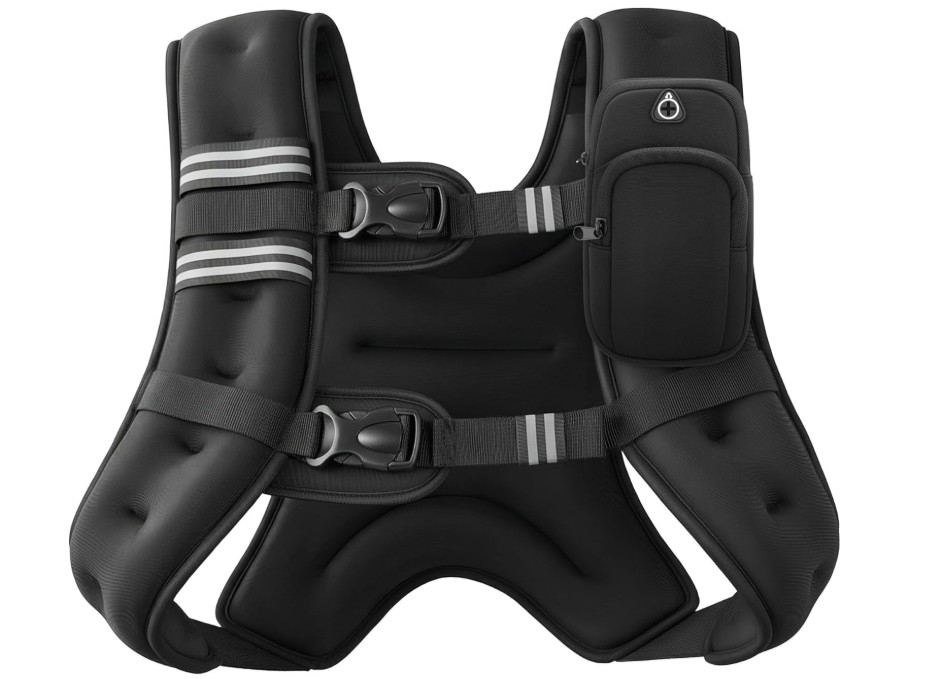
Here's the part I haven't gotten to yet: the 20-pound starter vest I bought first is still my daily driver. It's comfortable, it's familiar, and for a regular 30-minute walk it does exactly what I need.
But somewhere around month four, I started wondering whether I should be progressing the weight. The research on weighted vest training generally suggests that as your body adapts, you can scale up — both to keep the bone density signal strong and to continue building strength. Most experts recommend topping out somewhere between 8-15% of your body weight for sustained use, though some go higher with proper conditioning.
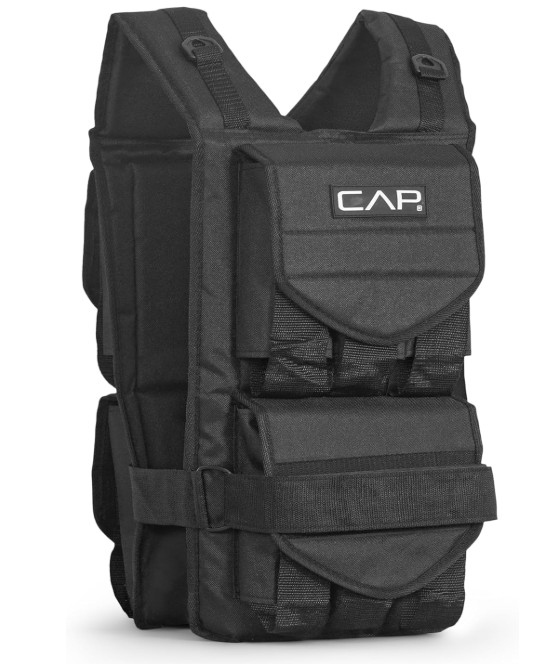
So I bought a second vest: a heavier adjustable model that goes up to 50 pounds with removable weight plates. I'm not wearing it at 50 pounds. I'm using it the way it's designed to be used — adding weight gradually as my body adapts, currently working in the 28-32 pound range.
Honest assessment of the heavier vest: it's a different category of product. The weight plates sit on the chest rather than being distributed through the vest fabric, which makes it less comfortable for a woman's frame — the chest plates can sit awkwardly depending on body shape, and the overall fit is more "tactical training gear" than "everyday walking companion." The build quality is solid and the adjustability is genuinely useful, but it's not the vest I'd recommend to someone starting out.
What it gives me is versatility. As I progress, I can add weight. When I want a lighter walk, I can remove plates. As I move into heavier resistance training that incorporates the vest, I have a tool that scales with me. The 2-pound vest is still in heavier rotation for daily walks. The adjustable vest is for progression days and specific training sessions.
If you're starting out: get the simpler, comfortable, fixed-weight vest first. Get used to wearing weight before you invest in adjustable systems.
If you're already six to twelve months in and ready to progress: an adjustable heavier vest is worth considering, with the caveat that the fit is genuinely less comfortable for women and you should size carefully.
I'm glad I own both. I would not have started with the heavier one.
Who Should and Shouldn't Buy One
Probably yes: Women in perimenopause or menopause who want to address bone density proactively. Women who already walk regularly and want to add a research-supported intensifier. Women who have been told by their doctor that they're at risk for osteoporosis and need weight-bearing activity. Women who are bored with regular walks and want a way to make them more effective without adding time.
Probably not, or talk to your doctor first: Women with existing back, hip, or knee injuries. Women with diagnosed osteoporosis (the vest may need to be calibrated very carefully). Women with balance issues or fall risk. Women who hate walking and would not walk regularly even with a vest (the vest doesn't fix that problem).
Maybe later: Women who are still building a consistent walking habit. Get the walks happening first. Add the vest after the routine is established.
The Verdict at 90 Days
If you'd asked me on day 1, I would have told you the weighted vest was a regrettable purchase and a moderately uncomfortable experience.
If you'd asked me on day 30, I would have told you that I was probably going to stick with it but I wasn't enjoying it.
If you ask me on day 90, here's the honest answer: I will not walk without it now. The vest is part of the walk. The walk without the vest feels insufficient. My posture is better. My strength is better. My future bones will probably thank me. I am still mildly annoyed that this is what life looks like in midlife, but I am annoyed and stronger.
The vest stays. The vest is also coming with me to Crete or Cyprus when I move in 2027. The vest, like most of the things I have grudgingly accepted in menopause, has earned its place by being right when I didn't want it to be.
If you're considering one, get one. Start light. Push through the first month. Reassess at day ninety. The research is on your side, your bones are listening, and the inconvenience of the first few weeks is small compared to what's at stake.
You can find weighted vests in a variety of weight ranges and price points. The one I use is the ZELUS Weighted Vest that comes in 6lb, 8lb, 12lb, 16lb, 20lb, 25lb, 30lb (you know I use the 20 pound version), which has held up well over a year of regular use and is the configuration I'd recommend for most women starting out. My second vest is CAP Barbell Adjustable Weighted Vest (aka "The Beast", but the adjustable weights are easy to use). Full disclosure: these are my affiliate links, and if you buy through it I earn a small commission at no cost to you. I only recommend it because it is the actual vest I wear.
If you have a weighted vest you swear by, or if you've been thinking about getting one and have questions, I'd love to hear. The midlife fitness conversation is one I find myself in often, and the weighted vest tends to come up almost every time.
As an Amazon Associate I earn from qualifying purchases.

Subscribe to our Mailing List
And that's just a peek at what we offer. Get more marketing tips straight to your inbox.
Who's writing this:
I'm not a menopause expert, a travel expert, or an expat-life guru. I'm a 51-year-old woman who spent her career in corporate, lost her dad recently, is dealing with HRT that may or may not be working, and decided the next chapter is going to be lived somewhere with better light and slower mornings. I'm documenting all of it on Instagram and Pinterest as @menopausenomad. The checklist is one piece. The journey is the rest.
Testimonials
What others are saying

"Excellent service!"
Excellent service! They take care of everything from cleaning to maintenance, making managing my vacation rental completely stress-free. Highly recommend!


"Highly recommend this"
"Testimonial lorem ipsum dolor sit amet, consectetur adipisicing elit. Autem dolore, alias, numquam enim dolor elit." - Your Name
" Impressed with their professionalism"
I’ve been so impressed with their professionalism and attention to detail. The in-house cleaning and maintenance teams are outstanding, and I’ve seen a noticeable difference in guest satisfaction.
"Hassle free process"
They handle everything seamlessly! I no longer worry about the upkeep of my rental, and their prompt communication has made the entire process hassle-free.
Testimonials

John Doe
Lorem ipsum dolor sit amet, consectetur adipiscing elit, sed do eiusmod tempor incididunt ut labore et dolore magna aliqua. Ut enim ad minim veniam, quis nostrud exercitation ullamco laboris nisi ut aliquip ex ea commodo consequat.


Jane Doe
Lorem ipsum dolor sit amet, consectetur adipiscing elit, sed do eiusmod tempor incididunt ut labore et dolore magna aliqua. Ut enim ad minim veniam, quis nostrud exercitation ullamco laboris nisi ut aliquip ex ea commodo consequat.
Get In Touch With Us
Phone:
(780) 882-9763
Shop:
Site 4 Comp 3 RR 3, Rimbey AB T0C 2J0
Email:
Email: [email protected]
Site: www.menopausenomad.com