Menopause Changed More Than My Body
It changed how I wanted to live, work, travel, and spend the next chapter of my life.
Why I Started Menopause Nomad
If you've ever stood in front of a hotel mirror at 3 a.m. wondering why no one warned you about this part of menopause — this is for you.
I’m 51. After nearly three decades in corporate leadership, I found myself asking a bigger question:
Where do I actually want to spend the next chapter of my life?
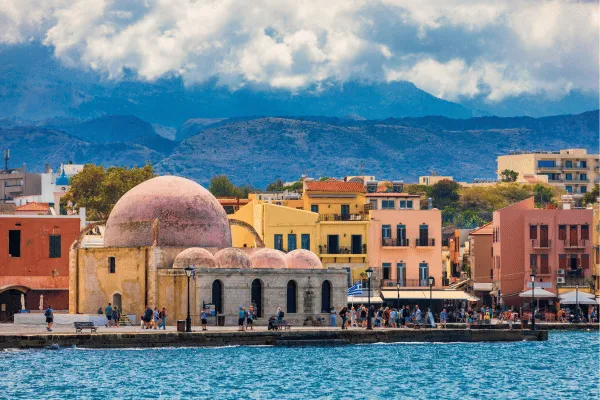
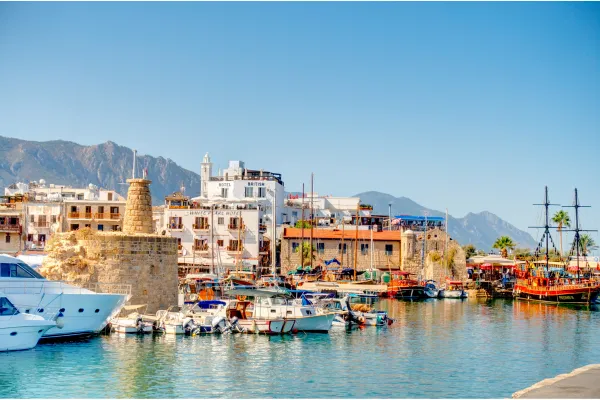
Right now, that answer may be Cyprus. Or Crete. I haven’t decided yet.
What I do know is this: menopause changed far more than my body. It changed how I want to live, work, travel, and move through the world.
I’m building toward a slower, more intentional life abroad while navigating hot flashes that ignore itineraries, sleep that now requires strategy, and a body that suddenly negotiates every carry-on item.
I’ve always traveled carry-on only.
Menopause renegotiated the contents.
The checklist I created isn’t influencer packing fantasy or affiliate-stuffed perfection. It’s the real list — what actually helps, what didn’t work, and what I stopped bringing entirely.
If you’re somewhere between “I wonder if I could do this” and “I’m actually doing this,” I made this for you.
The Honest Carry-On Checklist for Menopausal Women
23 items I actually pack. 7 I stopped bringing. Written by a 51-year-old who travels carry-on only and is figuring out menopause in real time.
What's In The Checklist?
The 23 items I won't fly without (with brand-agnostic notes)
The 7 things I packed for years and finally stopped bringing
What goes in the personal item vs. the carry-on (the menopause edit)
The cooling/sleep kit that lives at the top of the bag for a reason
A printable one-page version for the women who like a paper checklist (it's most of you)
Crete vs. Cyprus: Round One — Climate, Healthcare, and Why These Two Made the List
I'm 51, in menopause, and I have 24 months to figure out where I'm spending the rest of my life.
That sentence is doing a lot of work, so let me unpack it. I spent 28 years in corporate. I'm becoming a digital nomad. I'm dealing with the body changes nobody quite prepared me for, the parent-loss reality that's quietly accelerating my timeline, and the slow-building certainty that the next chapter is not going to look like the last one.
It's going to happen somewhere on the Mediterranean.
I've narrowed it to two: Chania, on the northwest coast of Crete, and Paphos, on the southwest coast of Cyprus. Both Greek-speaking (sort of — Cyprus has its own dialect). Both warm. Both have functioning expat infrastructure. Both have me genuinely torn.
This is the first in what will become a recurring series — me, doing the research in public, comparing these two places across the factors that actually matter to a 51-year-old woman planning a permanent move. Round one is climate and healthcare. The two that matter most for a body in menopause, in that order.
Why It Came Down to These Two
I'm not going to bury the lede: I looked at 14 places before this shortlist. Portugal, Spain, France, Italy, Croatia, Montenegro, Turkey, Malta, Morocco, Mexico, Costa Rica, and three I won't bother naming because they got cut in week one.
The criteria that survived the cut:
A climate that doesn't make my joints worse and doesn't shorten my comfortable months to nothing. Healthcare that's accessible, affordable, and actually competent — not "available in the capital city if you can find an English-speaker." A visa pathway that exists for non-EU citizens like me. A real expat community of women my age who are doing this too, because I'm not interested in being the only person in town who isn't 28 or 70. English widely enough spoken that I can function while I learn Greek slowly. Cost of living that lets me work less, not more. And a vibe that's actual slow, not "slow as marketed by people who left the city for three months."
Crete and Cyprus survived. Everywhere else fell out for one reason or another.
Today's round is the two factors that matter most to me right now: climate and healthcare. Both are non-negotiable. Both look different than the glossy travel guides tell you. Both, it turns out, are where these two places diverge more than I expected.
Climate: The Menopause Factor Nobody Mentions
Most "best places to retire" lists treat climate as a one-line item. "Warm year-round. Mediterranean. 300 days of sunshine." That's not enough information when your body has stopped regulating temperature the way it used to.
Here's what I actually need to know:
Summer intensity. How hot does it get, for how long? Because hot flashes in a 95°F apartment with no air conditioning is its own special hell. Humidity levels. Dry heat I can handle. Humid heat amplifies night sweats in a way that's hard to overstate. Winter mildness. Joint stiffness has become a thing. I'm not interested in a "warm" climate where January is still 45°F and gray. Wind patterns. The breeze off the sea is its own form of climate control. Whether you get it consistently matters. Comfortable months per year. If half the year is too hot to walk outside in the afternoon, that's a different lifestyle than "year-round outdoor living."
Let me compare the two on each of these.
Chania, Crete
Summers in Chania are hot but manageable. July and August average highs in the low 90s, with low humidity and a near-constant breeze off the Cretan Sea. The locals call it the meltemi — a northerly wind that blows through much of the summer and makes outdoor life livable in conditions that would be brutal elsewhere. Nights cool down meaningfully, even in peak summer. You sleep with windows open, not air conditioning.
Winters are mild but not warm. January and February average highs in the low 60s, lows around 50°F. Some rain, occasional cool snaps, but no real cold. You wear layers, not a coat.
The shoulder seasons — April, May, October, November — are remarkable. Days in the 70s, sea still warm enough to swim through October, light that photographers travel for.
The verdict for me: roughly 10 months of comfortable outdoor life per year. The two hottest months (late July through early September) require strategy — early mornings, long lunches indoors, evenings out. Manageable.
Paphos, Cyprus
Cyprus runs hotter. Summer highs in Paphos average mid-to-high 90s, with stretches in the low 100s genuinely possible. Humidity is higher than Crete because Cyprus sits further south and east, closer to the Middle Eastern climate band. The breeze exists but is less reliable.
Winters are warmer than Crete, though. January highs in the mid-60s, lows in the low 50s. The "winter" is functionally autumn. You can still beach-walk in February.
Shoulder seasons are excellent — similar to Crete but slightly longer on the warm end. The swim season extends into early November in a way it doesn't in Crete.
The verdict for me: roughly 11 months of comfortable outdoor life per year, but the comfortable definition is doing more work because the peak heat is real. Summer in Paphos with menopause symptoms is something I'd need a strategy for, not just a fan.
Climate Round Verdict
Narrowly, Chania. The meltemi wind matters more to me than the slightly milder winter. Reliable airflow is doing real work in menopause that AC alone doesn't replicate, and the lower humidity makes the heat easier to live with. Paphos isn't disqualified — it just loses round one by a margin.
Score: Crete 1, Cyprus 0.
Healthcare: The Question That Could Decide This
Let me be honest about why this matters more now than it would have 10 years ago: my dad died recently, my mom is aging, and I'm in active menopause treatment with HRT that may or may not be working. Healthcare has stopped being an abstraction. It's a daily consideration.
What I actually need:
English-speaking primary care. I'll learn Greek slowly. I won't learn medical Greek any time soon. Specialist access for HRT and women's health. Menopause care that isn't an afterthought, isn't dismissive, and ideally is current with modern hormone therapy protocols (which still varies wildly even within Western Europe). Reasonable wait times. Public systems with three-month waits for routine specialist visits aren't going to work. Cost predictability. Whether through public coverage, private insurance, or out-of-pocket — I need to know what care actually costs. Quality of facilities for anything serious. Hopefully I never need this. Hope is not a plan.
Chania, Crete
Greece has a national healthcare system (ESY), which non-EU expats can access after establishing residency. Coverage is decent for routine care, less reliable for specialty care, and Crete is, frankly, a regional system — meaning some procedures may require travel to Athens.
Most expats I've researched supplement with private insurance, which in Greece is relatively affordable — roughly €100-200/month for a 50-something woman, depending on the level of coverage. Private clinics in Chania exist but are limited compared to a major city.
English-speaking doctors are findable but not abundant. The British and Northern European expat community has built its own informal network of trusted practitioners, which is how most newcomers find care. HRT is available through both public and private channels but the menopause specialty layer is thinner than I'd like.
The hidden cost: anything genuinely complex likely means a trip to Athens or further afield. Manageable, not ideal.
Paphos, Cyprus
Cyprus has a national healthcare system (GHS), which non-EU residents can also access. Coverage is reasonably comprehensive once you're enrolled, and the system has been rebuilt aggressively over the past five years — it's actually one of the modernization success stories in southern European healthcare.
Crucially: Cyprus has a much larger British expat population than Crete, which has driven extensive English-language medical infrastructure. Paphos in particular has multiple private hospitals with English-speaking staff, women's health specialists, and modern facilities. Hormone therapy is well-supported and there are practitioners who specifically work with British and Northern European women in midlife.
Private insurance runs similar to Greece, roughly €100-200/month for comprehensive coverage. Out-of-pocket costs at private clinics are notably lower than equivalent UK or US care.
The catch: while Paphos has strong primary and specialty care, anything truly cutting-edge (rare cancers, complex surgical specialties) might still mean travel to Nicosia or abroad. But the bar for "reasonably accessible care" is meaningfully higher in Paphos than in Chania.
Healthcare Round Verdict
Clearly, Cyprus. The depth of English-speaking infrastructure, the modernized GHS system, and the specific availability of menopause-aware care tips this one for me. Crete's healthcare is fine. Cyprus's is genuinely better for what I need.
Score: Crete 1, Cyprus 1.
Where That Leaves Me After Round One
A draw. Which is honestly the answer I needed to hear. If one of these had run away with both categories, the decision would already be made and the next 23 months would be logistics, not deliberation.
Instead, I'm doing what I expected to do: weighing tradeoffs across categories that don't reduce to a single number.
What round one taught me:
Crete is the slightly better climate match for my body.
Cyprus is the more reliable healthcare match for my stage of life.
Both of these matter, but they're not the only criteria left to evaluate.
Next round, I'll dig into cost of living — actual numbers from real apartments, real grocery costs, real expat budget breakdowns. Then visa pathways, then community, then the quieter factors like distance from family and internet reliability for working remotely.
The shortlist is correct. The choice between them isn't going to be obvious. That's the truth I came in suspecting and round one confirmed.
If you're in a similar place — choosing between two Mediterranean options, planning your own version of this move, or just curious how a 51-year-old corporate refugee approaches a question this big — I'm documenting all of it. Once or twice a month I send a longer update by email, with the research, the doubts, the changing of minds. You can grab the carry-on checklist and join the list here.
Round two coming soon.

Subscribe to our Mailing List
And that's just a peek at what we offer. Get more marketing tips straight to your inbox.
Who's writing this:
I'm not a menopause expert, a travel expert, or an expat-life guru. I'm a 51-year-old woman who spent her career in corporate, lost her dad recently, is dealing with HRT that may or may not be working, and decided the next chapter is going to be lived somewhere with better light and slower mornings. I'm documenting all of it on Instagram and Pinterest as @menopausenomad. The checklist is one piece. The journey is the rest.
Testimonials
What others are saying

"Excellent service!"
Excellent service! They take care of everything from cleaning to maintenance, making managing my vacation rental completely stress-free. Highly recommend!


"Highly recommend this"
"Testimonial lorem ipsum dolor sit amet, consectetur adipisicing elit. Autem dolore, alias, numquam enim dolor elit." - Your Name
" Impressed with their professionalism"
I’ve been so impressed with their professionalism and attention to detail. The in-house cleaning and maintenance teams are outstanding, and I’ve seen a noticeable difference in guest satisfaction.
"Hassle free process"
They handle everything seamlessly! I no longer worry about the upkeep of my rental, and their prompt communication has made the entire process hassle-free.
Testimonials

John Doe
Lorem ipsum dolor sit amet, consectetur adipiscing elit, sed do eiusmod tempor incididunt ut labore et dolore magna aliqua. Ut enim ad minim veniam, quis nostrud exercitation ullamco laboris nisi ut aliquip ex ea commodo consequat.


Jane Doe
Lorem ipsum dolor sit amet, consectetur adipiscing elit, sed do eiusmod tempor incididunt ut labore et dolore magna aliqua. Ut enim ad minim veniam, quis nostrud exercitation ullamco laboris nisi ut aliquip ex ea commodo consequat.
Get In Touch With Us
Phone:
(780) 882-9763
Shop:
Site 4 Comp 3 RR 3, Rimbey AB T0C 2J0
Email:
Email: [email protected]
Site: www.menopausenomad.com